

Salem, NH history: from North Parish to Tuscan Village
A meetinghouse parish, a trolley resort, a racetrack and an interstate. How a farm town on the Massachusetts line became Salem.
Salem NH history runs from a Massachusetts parish to a New Hampshire town in 1750, then to a farm village with a train depot, a trolley amusement park and a famous racetrack. After Interstate 93 arrived in 1961, it became one of the busiest shopping towns in New England. The old meetinghouse still stands on the common, and the racetrack is now Tuscan Village. Here is the story, with a timeline.
Before 1750: the North Parish
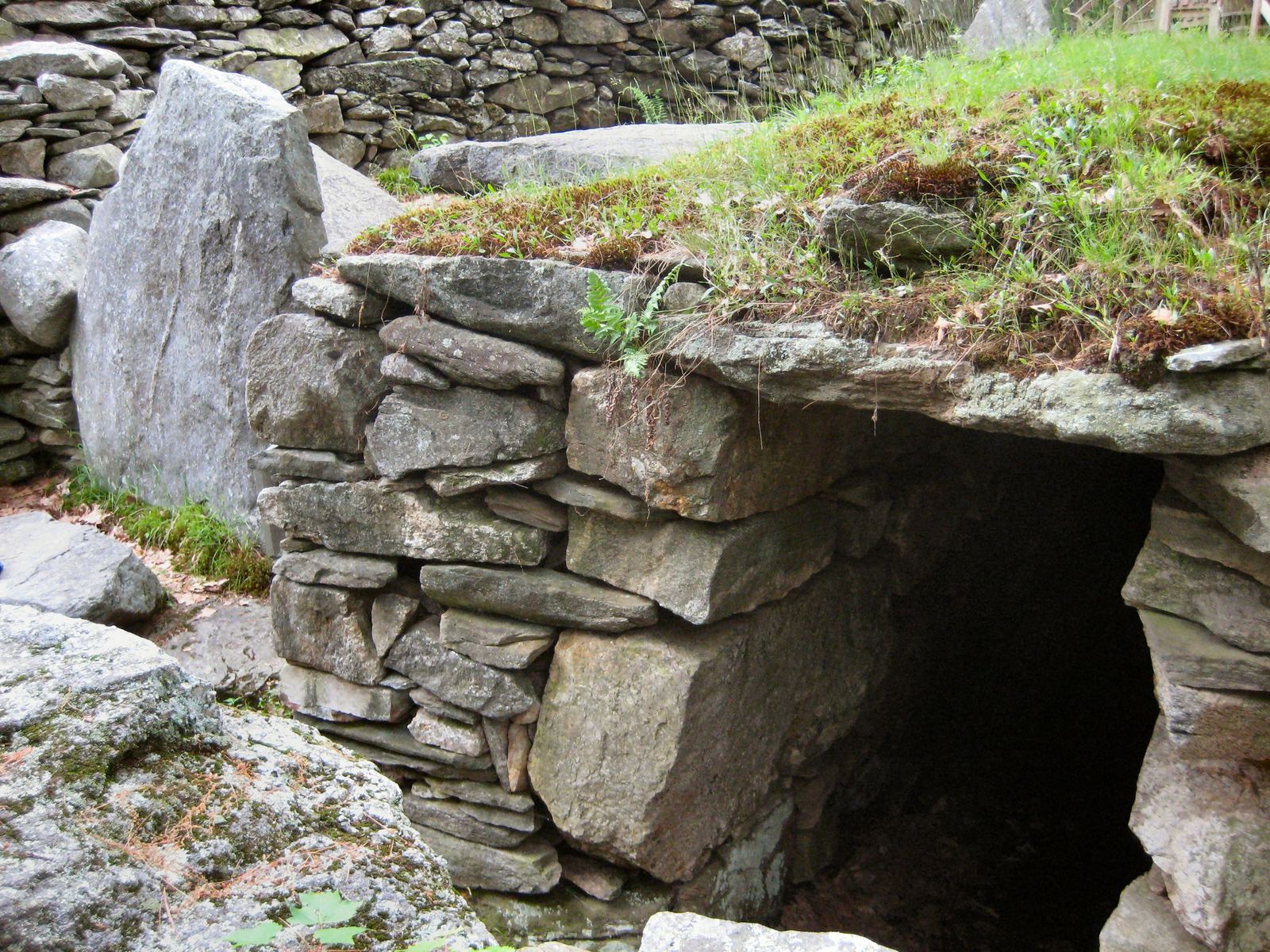
People lived here long before the town had a name. At America’s Stonehenge in North Salem, charcoal shows people on the hill about 4,000 years ago, and the site documents Pawtucket people living there. Native American tools and pottery have been found on its grounds.
European settlement in the area dates to 1652. By 1736 it was the North Parish of Methuen, Massachusetts. The parish built its meetinghouse in 1738, and that building still stands. When the Massachusetts–New Hampshire boundary was fixed in 1741, the parish ended up on the New Hampshire side. The common was laid out about the same time, along with the town’s first burying ground, in rows overlooking the Spicket River. The Rev. Abner Bayley, who served the parish for more than 50 years, is buried there.
1750: a New Hampshire town
Colonial Gov. Benning Wentworth incorporated Salem in 1750. The 2025 holiday parade marked the 275th anniversary with the theme “275 Years of Salem Memories.”
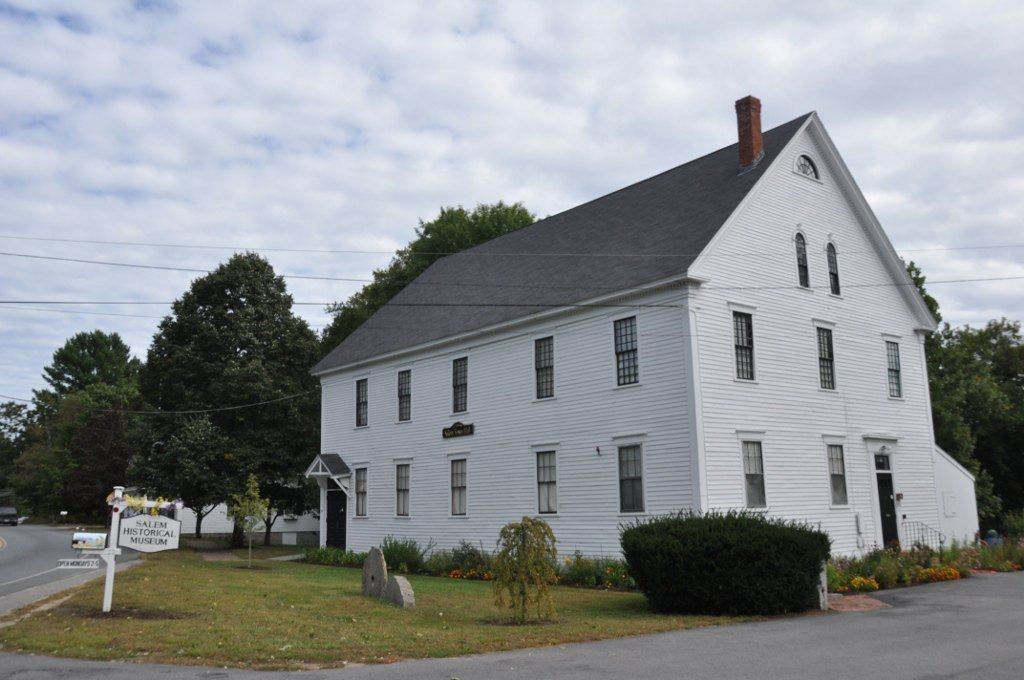
For a century and a half the town grew slowly. Salem had 1,218 people in the 1790 census and 2,041 in 1900. The meetinghouse served for both worship and town business until 1838, when it was moved to its present spot beside the common and became the Town Hall. Its single big room was split into two stories. Around 1900, Edward Searles paid for a renovation by architect Henry Vaughan that gave it Tudor Revival details. A district schoolhouse went up in 1861 and a fire station in 1906. Town meetings stayed in the old hall until 1958.
Today the common, the Old Town Hall, the burying ground, the schoolhouse and the firehouse make up the Salem Common Historic District, on the National Register since 2011. The Salem Historical Society runs its museum in the Old Town Hall.
Rails, trolleys and the racetrack
The railroad came first. Timetables from 1860 list Salem on the line between Lawrence and Manchester, later part of the Boston & Maine. The neighborhood around the station, at Main Street and Broadway, is still called Salem Depot. The line carried trains through Salem until 2001, and its bed is now the Salem rail trail.
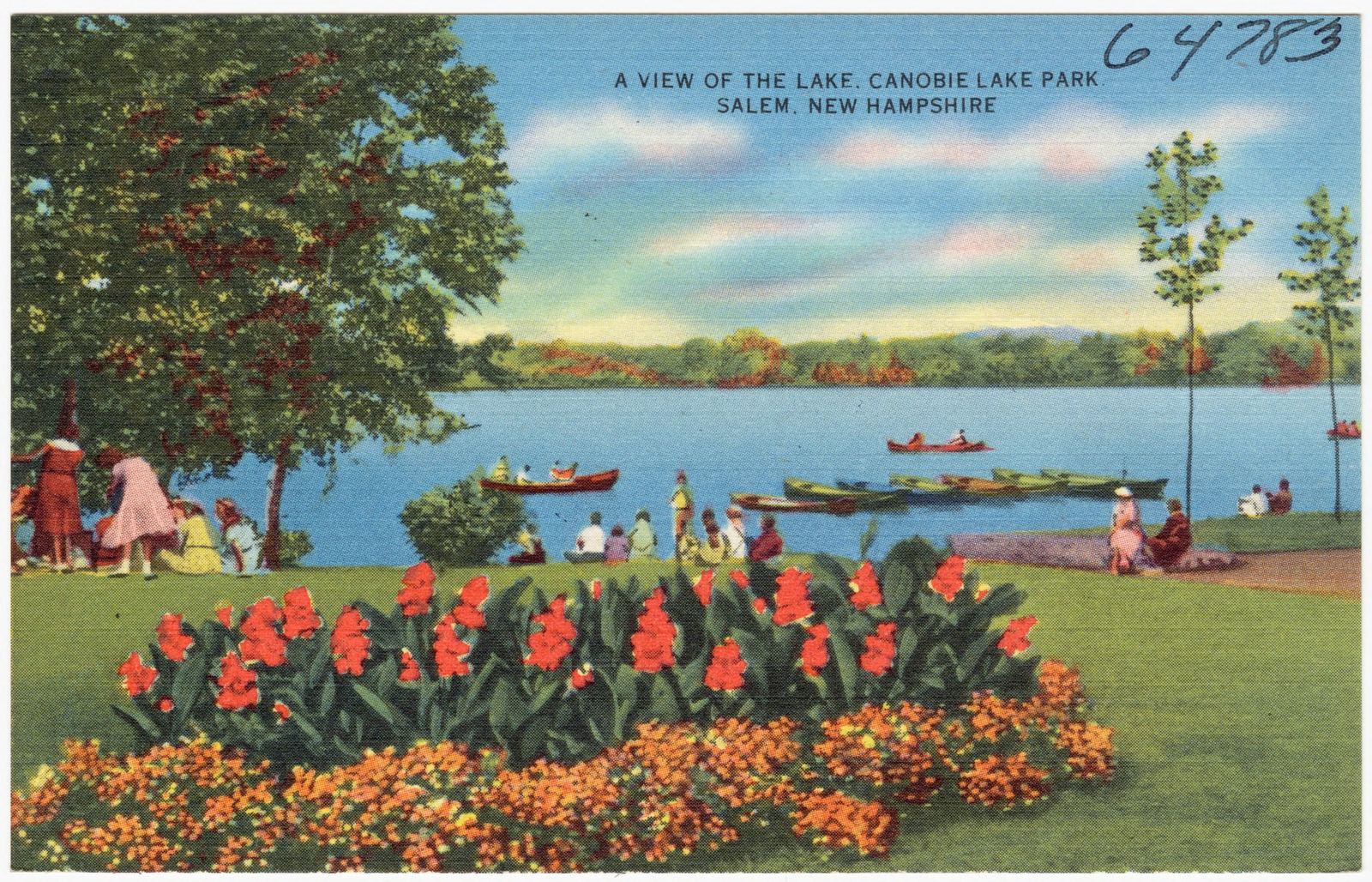
In 1902 the trolley arrived. The Hudson, Pelham & Salem Railways ran new electric lines through town, and less than eight weeks later it opened Canobie Lake Park as a “pleasure resort” to fill its cars. The park dates its antique carousel to 1903. The trolley era ended on Sunday, March 17, 1929, when the last electric car left town and the park closed. A new owner reopened it in 1932 and, in 1936, brought in the wooden coaster now called the Yankee Cannonball. The full story is in our Canobie Lake Park history.
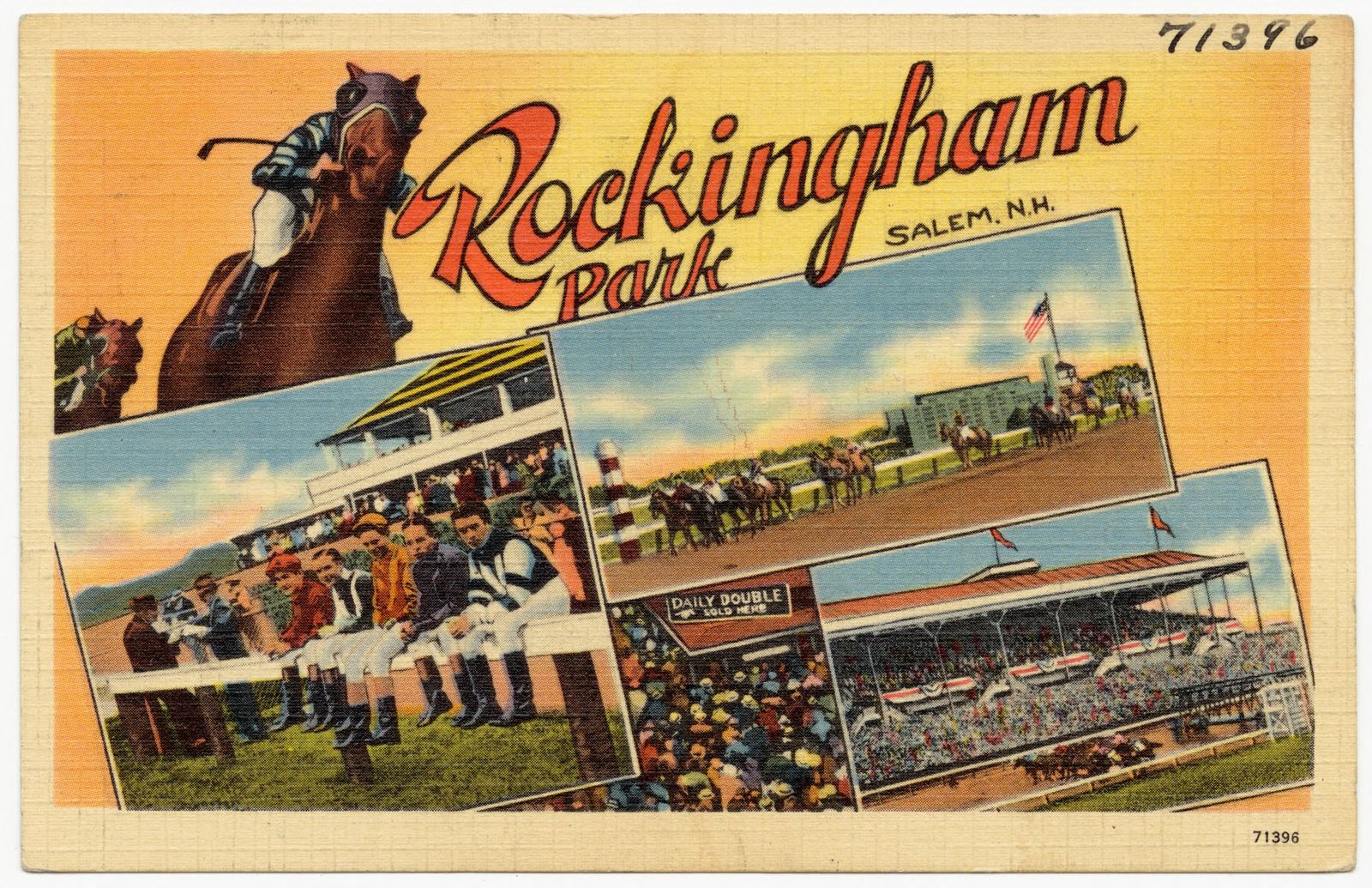
Rockingham Park opened on June 28, 1906, on Kimball and Woodbury farmland near the Salem depot. The state’s gambling ban shut it within days. It came back to life after 1931, when Lou Smith and Sam Simon bought it. In 1933 it became the first track in New England with pari-mutuel betting. Seabiscuit raced there in 1935 and 1936, and trains came up from Boston packed with racing fans. Read more in From the Rock to the Grand.
I-93 and the boom years
The modern town begins in August 1961, when the first piece of Interstate 93 in New Hampshire opened in Salem, from the Massachusetts line to Exit 2. Salem was suddenly a short drive from Boston, with no sales tax at the border. The census tells it: 4,805 people in 1950, 9,210 in 1960 and 20,142 in 1970. Suburban neighborhoods filled in, and Route 28 became a commercial strip.
The racetrack had its ups and downs. Fire destroyed the grandstand in 1980. New owners bought the park in 1983 and reopened it in 1984. In August 1991, the Mall at Rockingham Park opened next door and became the largest mall in northern New England. From 2006 to 2021 the state widened I-93 from the border to Manchester to eight lanes.
From the Rock to Tuscan Village
Thoroughbred racing ended in 2004 and harness racing about 2009. Rockingham Park closed on Aug. 31, 2016, after 110 years. Joe Faro, who had opened Tuscan Kitchen in Salem in 2010, bought 120 acres of the site that October for $40 million. The track was demolished in 2017 and construction on Tuscan Village began. The Artisan Hotel opened there in 2023, and Whole Foods Market followed in July 2026.
The racing name lives on across the road. Churchill Downs is building the Rockingham Grand in the former Lord & Taylor at the mall, due in mid-2027. Salem counted 30,089 people in the 2020 census.
Salem NH history timeline
- c. 4,000 years ago: people on the hill at America’s Stonehenge, by the site’s charcoal dates
- 1652: European settlement in the area begins
- 1736: the area is the North Parish of Methuen, Mass.
- 1738: the parish meetinghouse, today’s Old Town Hall, is built
- 1741: new boundary puts the parish in New Hampshire; common laid out
- 1750: Gov. Benning Wentworth incorporates Salem
- 1838: meetinghouse moved beside the common and becomes Town Hall
- 1902: trolleys arrive; Canobie Lake Park opens
- 1906: Rockingham Park opens June 28
- 1929: last trolley leaves Salem, March 17
- 1933: pari-mutuel betting at Rockingham, first in New England
- 1958: last town meeting in the Old Town Hall; Mystery Hill (America’s Stonehenge) opens as a museum
- 1961: I-93 opens in Salem, from the state line to Exit 2
- 1970: population passes 20,000, up from 4,805 in 1950
- 1991: the Mall at Rockingham Park opens in August
- 2001: trains stop running through Salem
- 2011: Salem Common Historic District joins the National Register
- 2016: Rockingham Park closes Aug. 31
- 2017: Tuscan Village construction begins on the old track
- 2025: Salem marks 275 years
- 2027: the Rockingham Grand is due to open at the mall
Where to see Salem’s history today
- Salem Common and the Old Town Hall museum, 310 Main St. Exhibits include Native American artifacts, Canobie memorabilia, a military room and Schoolhouse No. 5. Public hours aren’t posted online; call (603) 890-2280.
- Salem Depot and the rail trail, from Main Street north past the site of the old Canobie Lake station.
- Canobie Lake Park, for the 1903 carousel and the Yankee Cannonball.
- America’s Stonehenge, for the oldest and most argued-over chapter.
Salem, NH is often mixed up with Salem, Mass., the city of the 1692 witch trials. Our guide to Salem, NH vs. Salem, MA sorts it out, and for life in town today, see moving to Salem, NH.
Questions people ask
When was Salem, NH founded?
Salem was incorporated in 1750 by colonial Gov. Benning Wentworth. Before that it was the North Parish of Methuen, Mass., and the 1741 boundary settlement put it in New Hampshire.
Why is it called Salem, New Hampshire?
When the 1741 boundary put Methuen’s North Parish in New Hampshire, the new town took the name Salem, after Salem, Mass. The two towns are separate places with separate histories.
What is the oldest building in Salem, NH?
The Old Town Hall on Salem Common was built in 1738 as the parish meetinghouse and moved to its current site in 1838. It is now the Salem Historical Society museum.
What was Rockingham Park?
Rockingham Park was a horse racetrack in Salem that opened in 1906 and closed in 2016 after 110 years. Seabiscuit raced there, and Tuscan Village now stands on the site.
Get the weekend in your inbox
Every Thursday morning: the best things to do in Salem this weekend, one place worth eating at, and what’s coming up. Free.
Keep exploring
From the Rock to the Grand
Seabiscuit raced here. Now Churchill Downs is building the Rockingham Grand, opening in mid-2027.
The story of Canobie Lake Park
A streetcar company built it, the automobile nearly killed it, and three friends from New Jersey kept it going. How Salem’s lakeside park made it to 125.
America’s Stonehenge: the stones and the debate
Stone chambers on a Salem hilltop, a claim of 4,000 years and a long scholarly argument. Here is what you will see, and how to plan the walk.