

The story of Canobie Lake Park
A streetcar company built it, the automobile nearly killed it, and three friends from New Jersey kept it going. How Salem’s lakeside park made it to 125.
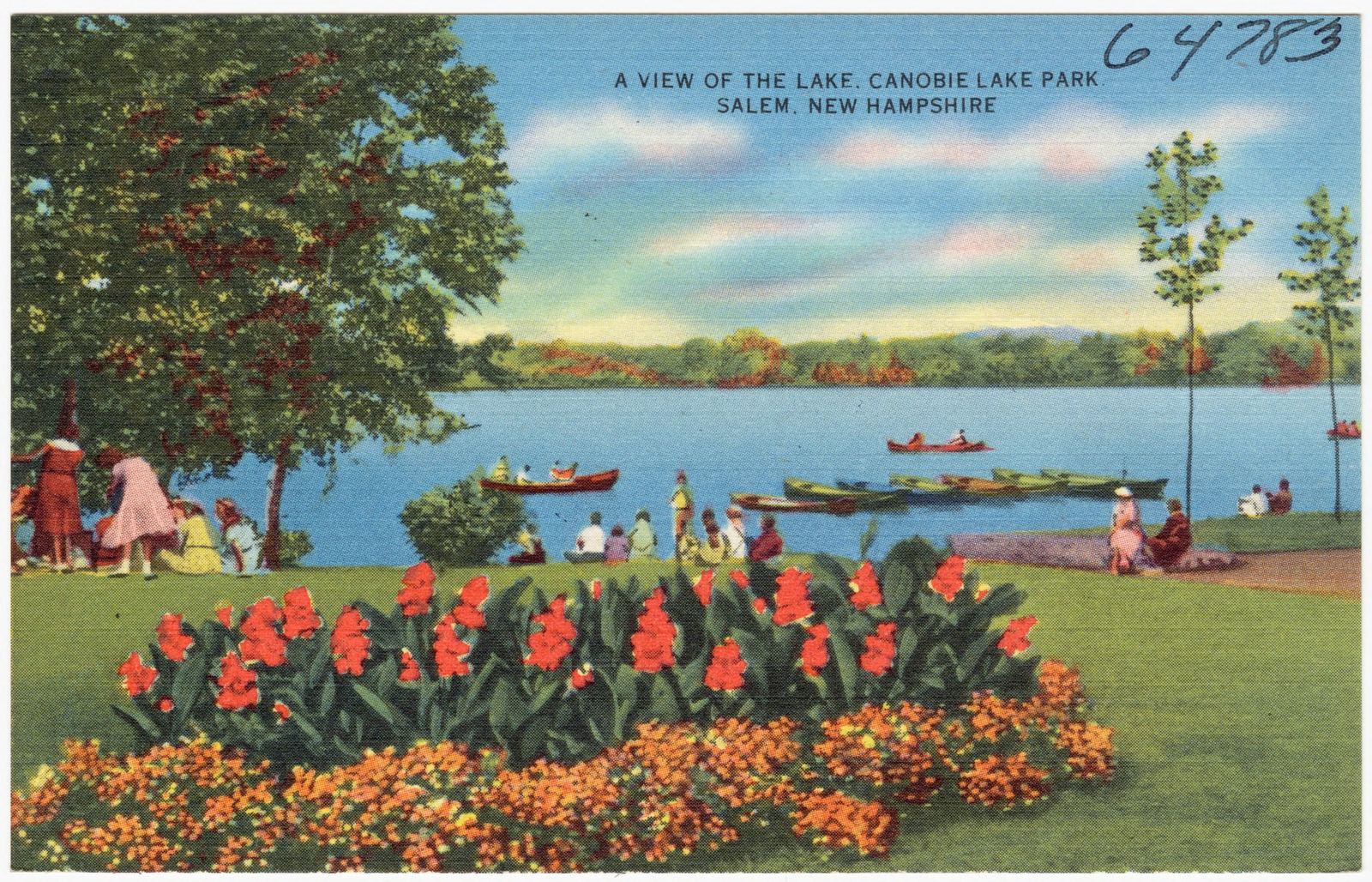
Canobie Lake Park history starts with a streetcar company that needed riders. In 1902 the Hudson, Pelham & Salem Railways opened a lakeside pleasure resort in Salem, NH, less than eight weeks after its new trolley lines began running. The trolleys are long gone, but the park is still on the same shore, and in 2027 it marks 125 years. It is one of a handful of trolley parks still operating in the United States. Here is how it got this far. For the short version, read 125 summers on the lake.
1902: a trolley park on Canobie Lake
Around 1900, streetcar lines were spreading across the country, and Salem sat in the middle of the trolley routes linking Lowell, Lawrence, Haverhill and Nashua. Trolley companies often built parks at the end of a line to get families riding on weekends, and the HP&S did the same. Early visitors dressed in their best for a day of canoeing, sporting events, picnics, the Circle Swing and the Penny Arcade. The grounds were planted so heavily that people called the place a botanical garden, and the park still treats its landscaping as part of the show.
In 1912 the HP&S merged with smaller lines into the Massachusetts Northeast Street Railway, which made Salem the hub of its trolley operations.
The automobile, and the 1929 closure
The car ended the trolley era fast. By 1923 the railway was asking New Hampshire’s Public Service Commission to let it abandon its line to Pelham, Dracut and Nashua. All but eight homes along the Pelham line had a car in the driveway, and for two weeks that January the line took in an average of $24.87 a day. Wages, maintenance and schedules were cut, riders grew angry, and the town of Salem declined an option to help keep its lines running. On Sunday, March 17, 1929, the last electric car rolled out of town, and Canobie went out of business soon after.
The park sat closed. In 1931 it went up for auction, with a plan on the table to tear it down and divide the land into house lots.
Patrick J. Holland and the comeback
The winning bid, $17,000, came from Patrick J. Holland, an Irish-born contractor who had built concrete roads in Massachusetts, New Hampshire and Vermont and had invented an electric paving machine. His crews spent seven weeks getting the park ready, and it reopened in the spring of 1932 with new gardens, new attractions and modern electricity. By one local history’s account, he also pulled up the trolley tracks and built a new entrance on North Policy Street and a parking lot for the car age.
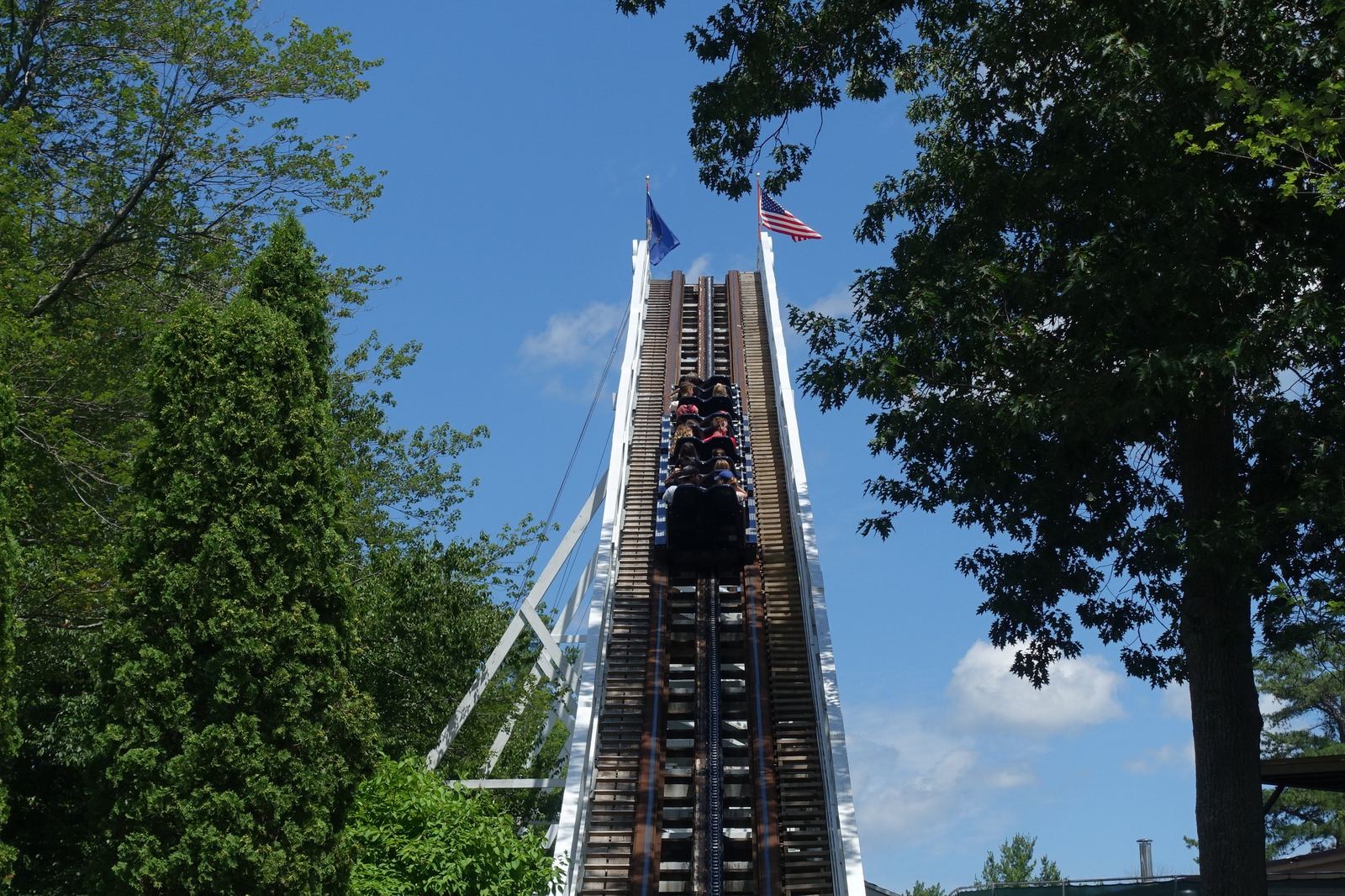
In 1936 he bought a wooden roller coaster from Lakewood Park in Waterbury, Connecticut, had it moved to Salem and rebuilt it as the Greyhound. Today it is the Yankee Cannonball, and it still runs.
The Dancehall years
From the 1930s into the early 1950s, Canobie’s Dancehall Theater, on the lakeshore, was an entertainment destination. The park’s own history lists Guy Lombardo, Duke Ellington, Harry James, Jimmy Dorsey and Frank Sinatra, and later Sonny & Cher and Aerosmith. Holland’s son, Maurice, booked a wide range of talent, from bandleaders to Boston Red Sox and Braves players such as Johnny Pesky, who played ball at the park’s diamond. The Dancehall Theater still stands, and the Canobie Express steam train runs behind it.
Hard years and a sale
Holland died in 1943, and his wife and son kept the park going. The 1950s were rough. On Aug. 31, 1954, Hurricane Carol wrecked part of the coaster, including its lift hill, and it was rebuilt for the next season. By 1957 a fire, a robbery, a hurricane and the fading of the big-band era had worn the family down, and the park went up for sale.
Three families since 1958
In March 1958 three friends from New Jersey bought Canobie: Anthony “Nino” Berni Sr., Kasmir Ulaky and Claude “Lou” Captell. The three men and their wives had worked at Palisades Amusement Park, on the cliffs above the Hudson River, and according to the Derry News they paid $450,000. It was a risky time to buy. The park’s history notes that the country’s roller coasters had dwindled from more than 2,000 to about 200. The new owners did much of the work themselves, pouring hot top over unused paths to create the paved midway that still winds through the trees. The three families still own Canobie, and their children run it.
Canobie Lake Park history in rides
The families set out to add a new attraction nearly every year. Some milestones, using the years given in Wikipedia’s ride list and the park’s own pages:
- 1903: the year the Antique Carousel was carved. It still turns to a 1922 Wurlitzer organ.
- 1936: the Greyhound coaster, now the Yankee Cannonball.
- 1958: Crazy Cups, the teacup ride.
- 1969: the Sky Ride.
- 1975: the Canobie Express steam train.
- 1981: the Giant Sky Wheel.
- 1983: the Log Flume, and the old coaster gets its Yankee Cannonball name.
- 1987: Mine of Lost Souls, the dark ride.
- 1991: the Dragon Coaster.
- 1998: the Boston Tea Party.
- 2002: Starblaster.
- 2005: Castaway Island and the Blue Heron lake cruise.
- 2008: the first Screeemfest.
- 2011: Untamed, with its 97° drop.
- 2017: Ice Jet.
- 2018: Castaway Island adds the River Slides and the Tidal River.
- 2019: the two-level Venetian Carousel.
- 2024: Time Winder.
Some favorites are gone. The steel Canobie Corkscrew last ran in 2021, the Tall Timber Splash water coaster closed after 2023, and the park’s swimming pool, which opened in 1912, closed in 2007. Today’s rides are sorted by thrill level in our Canobie rides guide.
2027: 125 years on the lake
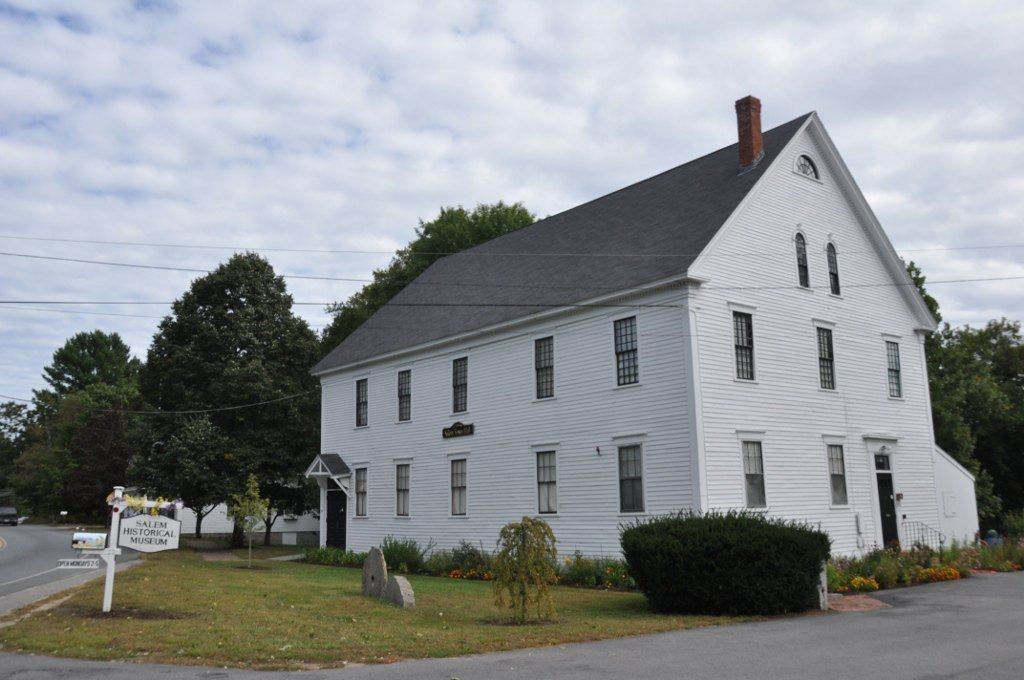
Canobie opened in the summer of 1902, so 2027 marks 125 years. As of October 2026 the park had not announced anniversary plans, but 2027 season passes are already on sale, and they also cover the rest of 2026 Screeemfest. Watch canobie.com and our events calendar for news. To see Canobie memorabilia in town, visit the Salem Historical Society museum; more in our Salem, NH history guide.
Questions people ask
When did Canobie Lake Park open?
In 1902. The Hudson, Pelham & Salem Railways opened it as a trolley park less than eight weeks after its new lines began running.
Who owns Canobie Lake Park?
Three families. Their founders, three friends from New Jersey, bought the park in March 1958, and their children run it today.
Why did Canobie Lake Park close in 1929?
Cars had taken the trolley’s riders. After the last electric car left Salem on March 17, 1929, the park went out of business. It reopened in 1932.
Is Canobie Lake Park a trolley park?
Yes. It was built by a streetcar company in 1902 and is one of the few trolley parks still operating in the U.S.
Get the weekend in your inbox
Every Thursday morning: the best things to do in Salem this weekend, one place worth eating at, and what’s coming up. Free.
Keep exploring
The Yankee Cannonball, still rolling
It was built for a park in Connecticut, came to Salem by rail and survived a hurricane. Meet New Hampshire’s oldest operating roller coaster.
125 Summers on the lake
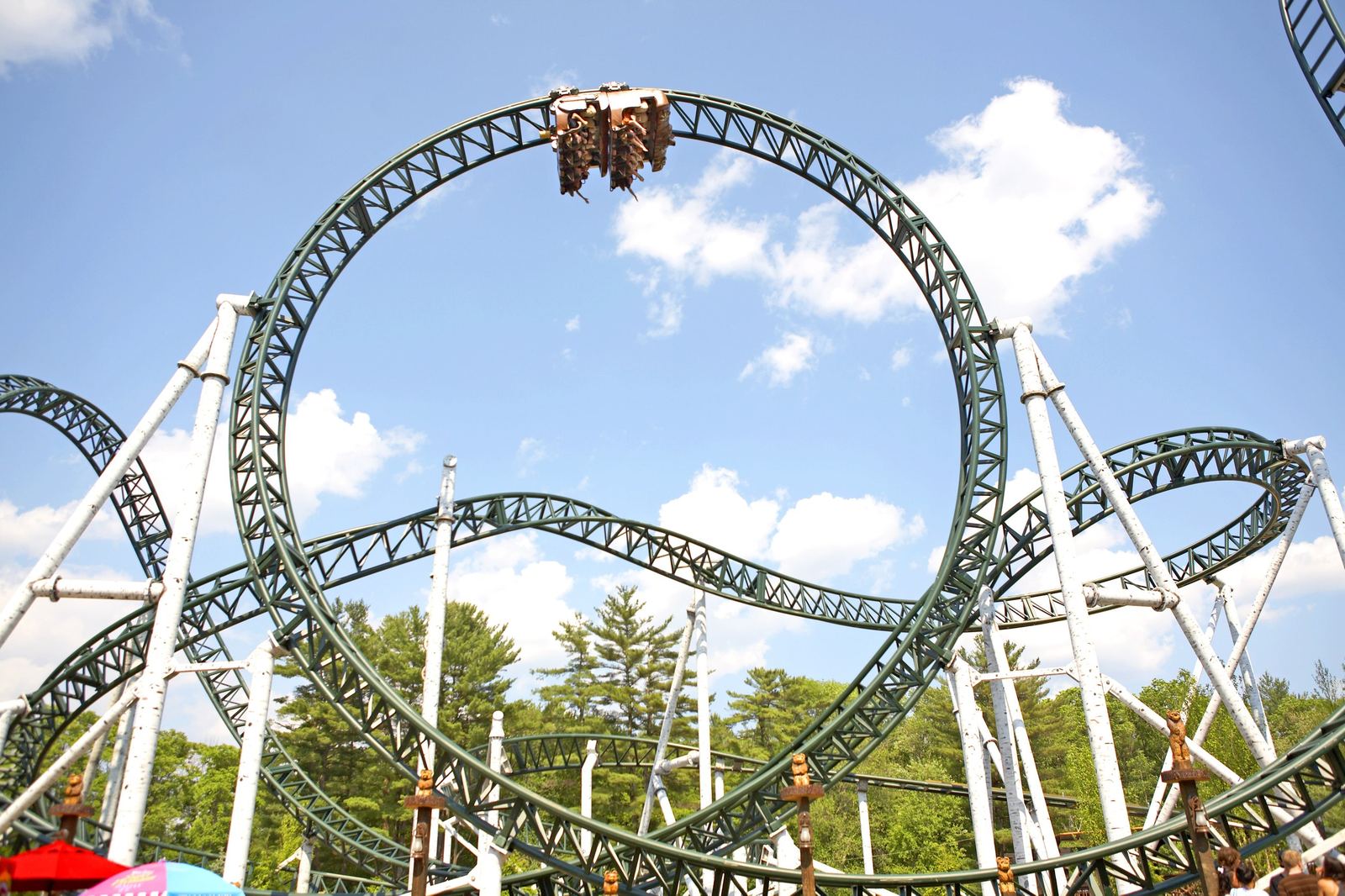
It opened in 1902 as a trolley company's lakeside garden. A century and a quarter later, it's where New England kids measure themselves against the height sign.
Salem, NH history: from North Parish to Tuscan Village
A meetinghouse parish, a trolley resort, a racetrack and an interstate. How a farm town on the Massachusetts line became Salem.