

America’s Stonehenge: the stones and the debate
Stone chambers on a Salem hilltop, a claim of 4,000 years and a long scholarly argument. Here is what you will see, and how to plan the walk.
America’s Stonehenge is a wooded hilltop of stone chambers, walls and standing stones at 105 Haverhill Road in Salem, New Hampshire. It is open every day of the year except Thanksgiving and Christmas, and the main loop takes about an hour. The site says its oldest stonework is about 4,000 years old. Most archaeologists don’t accept that. You can walk it and weigh the evidence yourself.
What America’s Stonehenge is
The stones sit on Mystery Hill, which is what the place was called until 1982, when it took the name America’s Stonehenge. It has no connection to Stonehenge in England. Robert Stone opened it to the public as a museum in 1958, after hearing about the ruins on a 1955 radio broadcast, and his family has run it ever since.
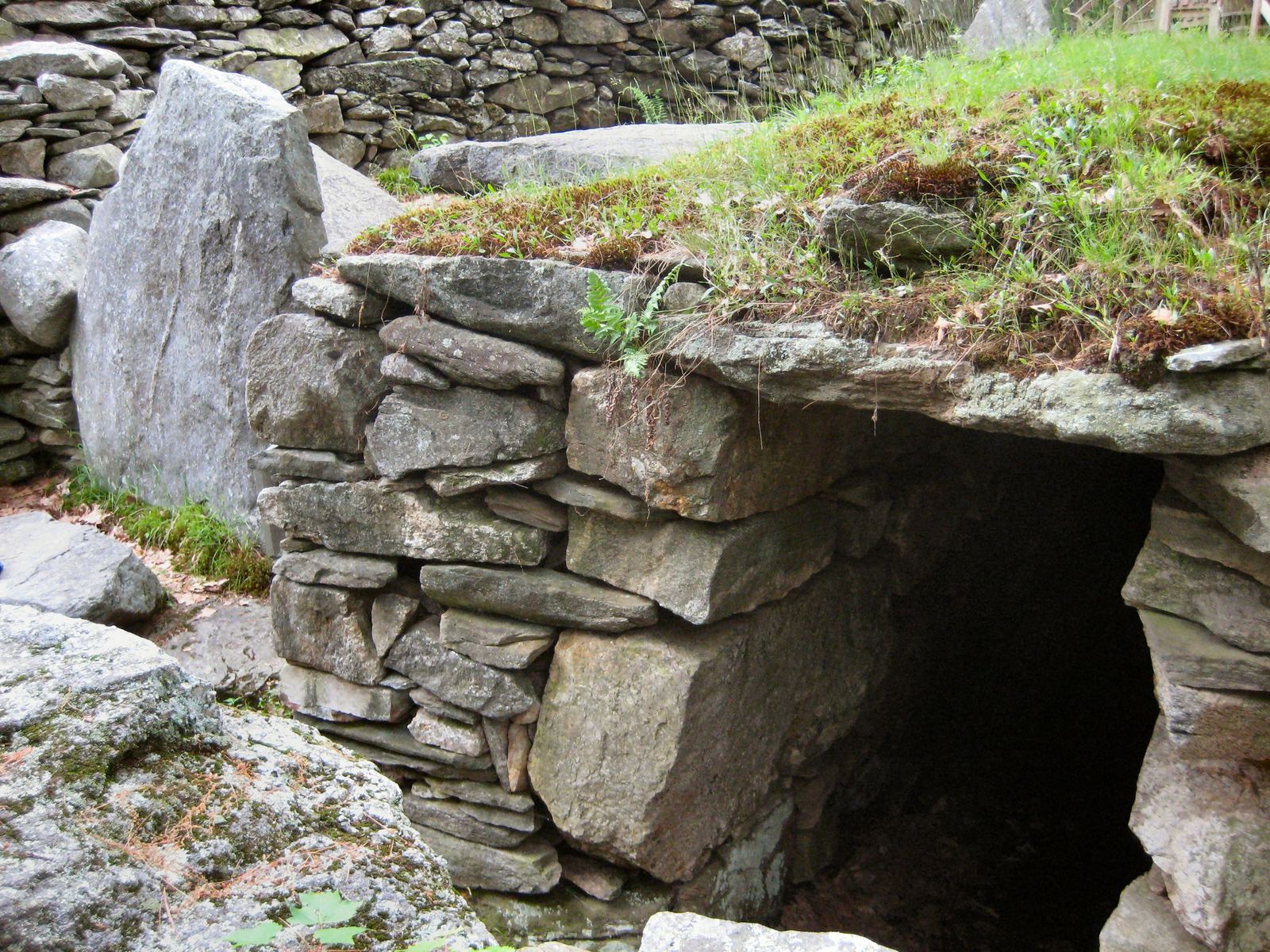
The main site is a cluster of low stone chambers, walls and upright slabs spread across the hilltop. The features you will pass include:
- The Oracle Chamber, with a stone “speaking tube”
- The Grooved Table, a slab about 9 feet long that weighs about 4.5 tons
- The Watch House Chamber and the East West Chamber
- The Summer Solstice Sunrise Monolith, one of the standing stones the site ties to sunrise and sunset points
- The Serpent Wall, an S-shaped stone wall the site says runs 2,550 feet around the main site
Around all of it are more than 100 acres of woods, with nature trails, the Susan M. Hodge Bluebird Sanctuary and a pollinator garden.
The competing theories
What the site says
The museum says people visited the hill as long as 7,000 years ago and that its earliest stone construction dates to about 4,000 years ago. It cites radiocarbon dates of 2,000 to 4,000 years on charcoal found at the site. It also cites soil tests from 2020 that dated soil on top of the Oracle Chamber to about 1550 and a wall near the Watch House Chamber to about 1400, before European colonists arrived.
The site also makes an astronomical case. It lists 57 possible alignments with the sun, moon and stars, including stones that mark sunrise and sunset at the solstices and equinoxes, and a North Stone that points to true north. It says the rising sun lights a quartzite stone inside the Watch House Chamber on the spring and fall equinoxes. The museum describes the original builders as unknown. It notes that some researchers see links to ancient European or Mediterranean cultures, and says it keeps an open mind.
What archaeologists say
Mainstream archaeologists reject the idea that ancient Europeans built anything here. Charcoal and Native American tools and pottery show that people used the hill for thousands of years. That is not in dispute, and the site itself documents Pawtucket people living there. But charcoal in the ground does not date the stones stacked above it, and no clear pre-Columbian European artifacts have been found.
The written record starts with farmers. A 1907 town history describes “Jonathan Pattee’s Cave,” where Pattee once lived, and the site says the Pattee family lived on the property from 1802 to 1850. Many researchers think Pattee built much of what stands today.
Then came William Goodwin, an insurance executive who bought the land in 1937. He believed Irish monks, the Culdees, had lived there before Columbus, and he moved stones to fit that theory. Archaeologist David Starbuck wrote that Goodwin may have “created” much of what is visible today. Many stones also carry drill marks from quarrying. The famous “sacrificial table” has a farm explanation too: it closely resembles the lye-leaching stones old farms used to make soap. Barry Fell’s 1976 book America B.C. argued for ancient inscriptions at the site, and experts widely consider that work pseudo-archaeology.
Where that leaves you
Some of the story is settled. Native people used this hill for thousands of years, colonial farmers worked it, and a 20th-century owner rearranged it. Whether any of the stonework is older than that is the open question. The museum itself says less than 1% of the property has been fully excavated. Go curious and keep both accounts in mind.
Visiting America’s Stonehenge: hours, tickets and trails
- Hours: 9 a.m.–5 p.m. daily, all year. Last admission is 4 p.m. Closed Thanksgiving and Christmas.
- Admission: adults $19, seniors (65+) $17, military and veterans $15, children 4–12 $12, under 4 free. Buy at the visitor center or online, where the code ONLINE1 takes $1 off each ticket. A ticket is good for the whole day.
- The loop: half a mile to the historic site and back, about an hour. Expect steady slopes, uneven ground and several steps. The site warns it may be hard going for people with limited mobility.
- Self-guided: use the paper map or the free mobile app and audio tour.
- Visitor center: at the base of the hill, with parking, tickets, restrooms, a gift shop and a museum of artifacts from the site. The visitor center is accessible, and there is room to park vans, buses and RVs.
- For kids: children 12 and under can dig for gemstones in a dig pit with real research tools, included with admission.
- Rules: no pets, though trained service animals are allowed. No personal drones. Personal photos and video are fine.
- Guided tours: VIP tours run by appointment only.
Snowshoeing in winter
When there is snow, the trails open for snowshoeing during regular museum hours. They range from flat, beginner-friendly paths to rugged ones. Bring your own snowshoes or rent a pair at the site. The site does not recommend snowshoeing for young children and suggests families bring a sled to pull instead. The snowshoeing page says when the trails are closed for lack of snow, so check it before you go.
October
In October the site runs evening Haunted History guided tours. Dates and tickets are on the events page at stonehengeusa.com.
Tips for your visit
- Wear real shoes. The site recommends low-heeled, supportive footwear for the slopes and steps.
- Arrive by 3 p.m. That gives you time for the loop and the museum before the 5 p.m. close. Last admission is 4 p.m.
- Download the app at home. Then the audio tour is ready when you reach the first stop.
- Leave the dog home. Pets aren’t allowed, to protect wildlife and the structures.
- Make a day of it. Salem’s other stops are a short drive away. See our list of things to do in Salem, NH, plan lunch with our dining guide, or read the history of Salem, NH for the town’s other old stones, on Salem Common.
- Bringing kids? The gemstone dig is the hook. Our guide to Salem, NH with kids has more.
- Visiting in the off-season? The site stays open in winter, long after Canobie Lake Park closes for the year. See winter in Salem, NH.
Questions people ask
Who built America’s Stonehenge?
No one knows for certain. The site says its earliest stonework is about 4,000 years old and its builders are unknown, while mainstream archaeologists point to 19th-century farm use and later rearranging by owner William Goodwin, and reject an ancient European origin.
How long does it take to walk America’s Stonehenge?
Plan on about an hour. The loop trail to the historic site is a half mile, with slopes, uneven ground and steps.
How much does America’s Stonehenge cost?
Admission is $19 for adults, $17 for seniors 65+, $15 for military and veterans and $12 for children 4–12. Children under 4 are free, and the code ONLINE1 takes $1 off each ticket bought online.
Is America’s Stonehenge open in winter?
Yes. It is open daily 9 a.m.–5 p.m. all year except Thanksgiving and Christmas, and offers snowshoeing when there is enough snow.
Can you bring dogs to America’s Stonehenge?
No. Pets are not allowed on the site, though trained service animals are.
Get the weekend in your inbox
Every Thursday morning: the best things to do in Salem this weekend, one place worth eating at, and what’s coming up. Free.
Keep exploring
Salem, NH history: from North Parish to Tuscan Village
A meetinghouse parish, a trolley resort, a racetrack and an interstate. How a farm town on the Massachusetts line became Salem.

25 things to do in Salem, NH
A 124-year-old amusement park, a village on the old racetrack, a disputed stone site and two tax-free shopping districts. Here are 25 places to start.

Salem with kids, by age
From storytime for toddlers to Untamed for teens, here is what works at every age, plus how to do Canobie with little ones.